Buy germanyonline.org ?
We are moving the project
germanyonline.org .
Are you interested in purchasing the domain
germanyonline.org ?
domain@kv-gmbh.de · 0541-91531010
Buy germanyonline.org ?
What is the method of equating complex exponential functions?
The method of equating complex exponential functions involves setting two complex exponential functions equal to each other and solving for the complex variable. This typically involves using the properties of complex numbers and the rules of exponents to manipulate the equations and isolate the complex variable. Once the variable is isolated, the solutions can be expressed in terms of real and imaginary parts, providing a complete description of the complex exponential functions. This method is commonly used in solving differential equations and analyzing complex systems in engineering and physics. **
How do the substitution method, the equating method, and the elimination method differ?
The substitution method involves solving one of the equations for one variable and then substituting that expression into the other equation. The equating method involves setting the two equations equal to each other and solving for one variable. The elimination method involves adding or subtracting the two equations to eliminate one of the variables, and then solving for the remaining variable. Each method has its own unique approach to solving systems of equations, and the choice of method depends on the specific equations and variables involved. **


Similar search terms for Equating
Top-Angebote
Products related to Equating:
-
Titan Assassins Creed - The Complete Visual History: The Definitive Visual HistoryThis stunning book explores the rich mythology of Assassins Creed®, featuring the art and history of the series from the first groundbreaking game through the graphic novels to the DLCs. Highlighting the lush and vibrant art that has become a hallmark of the series, this luxury coffee-table book brings the games famous historical locations and figures to life and explores the evolution of each iconic Assassin and Templar.15,99 £*Shipping: 2,99 £Secure redirect to the provider
-
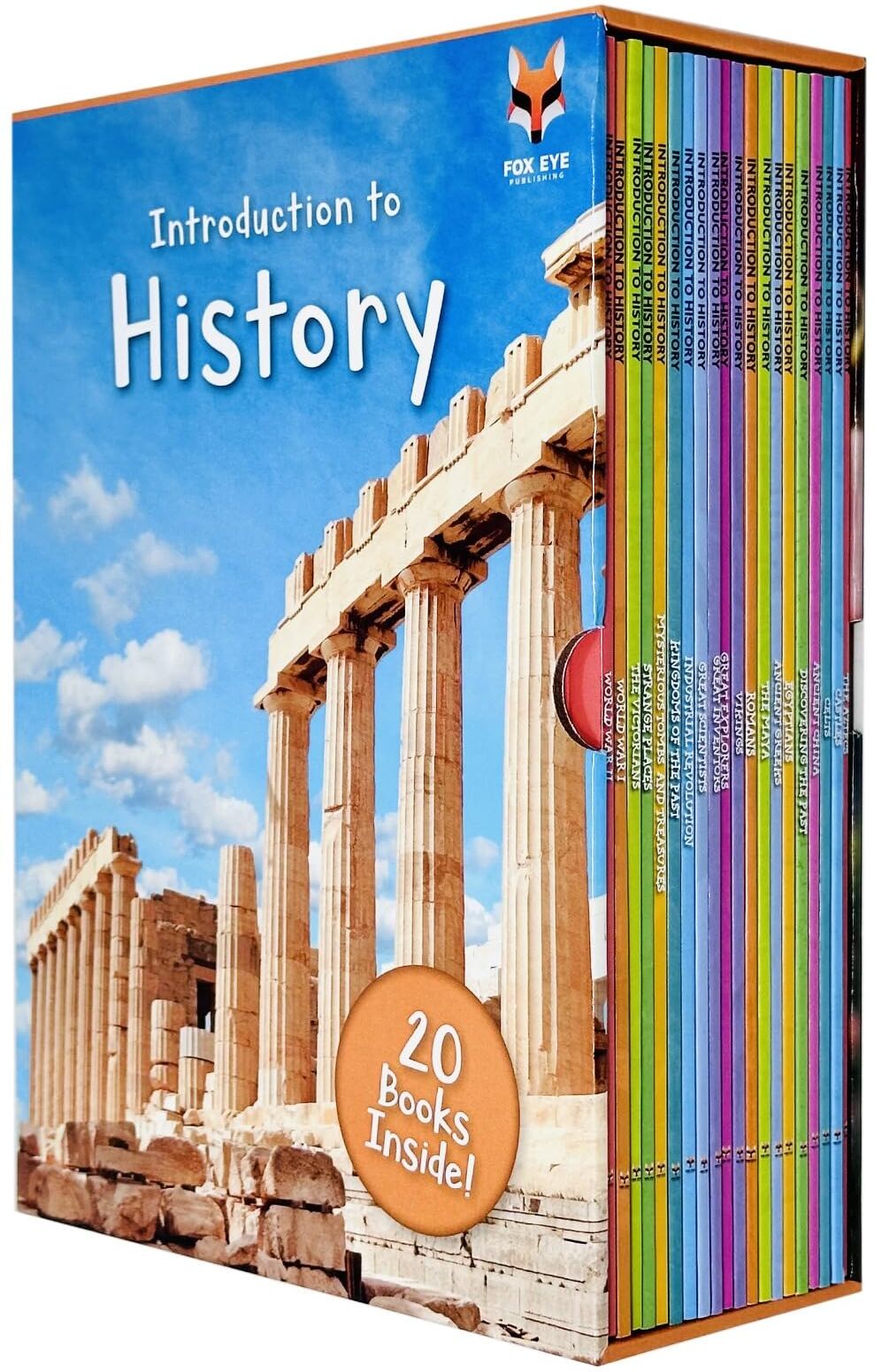
Fox Eye Publishing Introduction to History 20 Books Collection Box Set – Educational History Learning CollectionIntroduction to History 20 Books Collection Box Set (The Aztecs, Castles, Celts, Ancient China, Discovering the Past, Egyptians, Ancient Greeks, The Maya, Romans, Vikings, Great Explorers and More) Books in This Collection: Introduction to The Aztecs Introduction to Castles Introduction to Celts Introduction to Ancient China Introduction to Discovering the Past Introduction to Egyptians Introduction to Ancient Greeks Introduction to The Maya Introduction to Romans Introduction to Vikings Introduction to Great Explorers Introduction to Great Inventors Introduction to Great Scientists Introduction to Industrial Revolution Introduction to Kingdoms of the Past Introduction to Mysterious Tombs and Treasures Introduction to Strange Places Introduction to The Victorians Introduction to World War I Introduction to World War II12,99 £*Shipping: 2,99 £Secure redirect to the provider
-
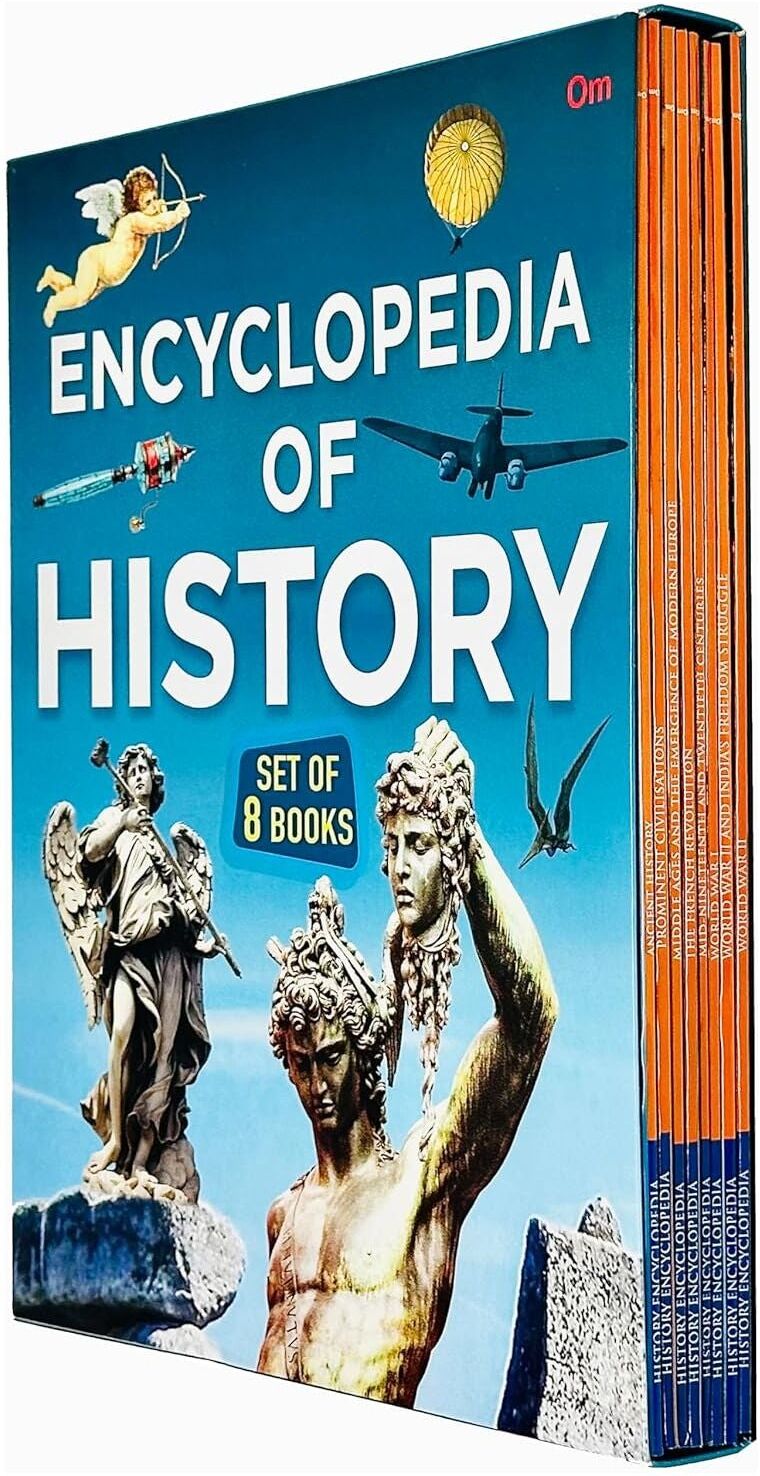
OM Books International Encyclopedia of History 8 Books Collection Set – World War History & Educational Learning CollectionEncyclopedia of History set of 8 books (World War I, World War II, World War II and Indias Freedom Struggle, Mid Nineteenth and Twentieth Centuries, The French Revolution & More): Titles in This Set: Encyclopedia: World War I Encyclopedia: World War II Encyclopedia: World War II and Indias Freedom Struggle Encyclopedia: Mid Nineteenth and Twentieth Centuries Encyclopedia: The French Revolution Encyclopedia: Middle Ages and the Emergence of Modern Europe Encyclopedia: Prominent Civilisations Encyclopedia: Ancient History Description: What made humans the way they are today? How were civilisations formed and erased? What makes up history? Get answers to all the questions and more in this history encyclopedia. Go back in time and learn all about human history, right from the time man began his journey in stone caves. Relive epic battles, learn about the rise and fall of great empires and a lot more.9,90 £*Shipping: 2,99 £Secure redirect to the provider


-
What is the equation for equating the Lorentz force and the centripetal force?
The equation for equating the Lorentz force and the centripetal force is given by: q(v x B) = m(v^2 / r) Where: - q is the charge of the particle - v is the velocity of the particle - B is the magnetic field - m is the mass of the particle - r is the radius of the circular path This equation represents the balance between the magnetic force experienced by a charged particle moving in a magnetic field (Lorentz force) and the centripetal force required to keep the particle in a circular path. **
-
How can one determine the maximum height of a projectile motion by equating energies?
One can determine the maximum height of a projectile motion by equating the initial kinetic energy of the projectile to the potential energy at the maximum height. At the maximum height, all of the initial kinetic energy is converted into potential energy. By setting the initial kinetic energy equal to the potential energy at the maximum height and solving for the height, one can determine the maximum height of the projectile motion. This method allows for a straightforward calculation of the maximum height without needing to consider the projectile's path or velocity at different points in its trajectory. **
-
How do the substitution method, the method of equating coefficients, and the elimination method differ?
The substitution method involves solving one of the equations for one variable and then substituting that expression into the other equation. The method of equating coefficients involves setting the coefficients of the variables in both equations equal to each other and solving for the variables. The elimination method involves adding or subtracting the equations to eliminate one of the variables and then solving for the remaining variable. Each method has its own unique approach to solving systems of equations and may be more suitable depending on the specific problem at hand. **
-
How do you bring an equation into normal form using the method of equating coefficients?
To bring an equation into normal form using the method of equating coefficients, you first expand and simplify both sides of the equation. Then, you compare the coefficients of like terms on each side of the equation. By setting the coefficients of each term on one side equal to the corresponding coefficients on the other side, you can solve for the unknown variables. This process allows you to rewrite the equation in normal form, with the unknown variables on one side and the constants on the other. **


What is done in an equating process and which number should always be moved to the right?
In an equating process, different forms of a test are compared to ensure that scores from different versions of the test are equivalent. This is done by using statistical methods to adjust the scores so that they can be compared accurately. The number that should always be moved to the right in an equating process is the equating constant, which is used to adjust the scores from different forms of the test to make them comparable. This constant is added to or subtracted from the scores to ensure that they are on the same scale. **
How do I equate the equations f(x) = 14x and g(x) = 2x+1 using the method of equating?
To equate the equations f(x) = 14x and g(x) = 2x+1 using the method of equating, you set the two equations equal to each other: 14x = 2x+1. Then, you solve for x by subtracting 2x from both sides to get 12x = 1, and then dividing both sides by 12 to get x = 1/12. This value of x is the solution that makes the two equations equal to each other. **
Top-Angebote
Products related to Equating:
-
From the Archives: Black History and Culture Value PackThis brand-new series is rooted in a profound commitment to shedding light on some of the important -- and often lesser-known -- aspects of Black history. From the Archives features landmarks, events, people, and artistic endeavors that have played...26,99 $*Shipping: 0,00 $Secure redirect to the provider
-
Orion The Book of Humans by Adam Rutherford – A Brief History of Culture, Sex, War & EvolutionWHAT MAKES US HUMAN? Waging war? Sex for pleasure? Creating art? Mastery of fire? In this thrilling tour of the animal kingdom, Adam Rutherford tells the story of how we became the unique creatures we are today. Illuminated by the latest scientific discoveries, THE BOOK OF HUMANS is a dazzling compendium of what unequivocally fixes us as animals, and reveals how we are extraordinary among them.4,98 £*Shipping: 1,99 £Secure redirect to the provider
-
Titan Assassins Creed - The Complete Visual History: The Definitive Visual HistoryThis stunning book explores the rich mythology of Assassins Creed®, featuring the art and history of the series from the first groundbreaking game through the graphic novels to the DLCs. Highlighting the lush and vibrant art that has become a hallmark of the series, this luxury coffee-table book brings the games famous historical locations and figures to life and explores the evolution of each iconic Assassin and Templar.15,99 £*Shipping: 2,99 £Secure redirect to the provider
-
What is the method of equating complex exponential functions?
The method of equating complex exponential functions involves setting two complex exponential functions equal to each other and solving for the complex variable. This typically involves using the properties of complex numbers and the rules of exponents to manipulate the equations and isolate the complex variable. Once the variable is isolated, the solutions can be expressed in terms of real and imaginary parts, providing a complete description of the complex exponential functions. This method is commonly used in solving differential equations and analyzing complex systems in engineering and physics. **
-
How do the substitution method, the equating method, and the elimination method differ?
The substitution method involves solving one of the equations for one variable and then substituting that expression into the other equation. The equating method involves setting the two equations equal to each other and solving for one variable. The elimination method involves adding or subtracting the two equations to eliminate one of the variables, and then solving for the remaining variable. Each method has its own unique approach to solving systems of equations, and the choice of method depends on the specific equations and variables involved. **
-
What is the equation for equating the Lorentz force and the centripetal force?
The equation for equating the Lorentz force and the centripetal force is given by: q(v x B) = m(v^2 / r) Where: - q is the charge of the particle - v is the velocity of the particle - B is the magnetic field - m is the mass of the particle - r is the radius of the circular path This equation represents the balance between the magnetic force experienced by a charged particle moving in a magnetic field (Lorentz force) and the centripetal force required to keep the particle in a circular path. **
-
How can one determine the maximum height of a projectile motion by equating energies?
One can determine the maximum height of a projectile motion by equating the initial kinetic energy of the projectile to the potential energy at the maximum height. At the maximum height, all of the initial kinetic energy is converted into potential energy. By setting the initial kinetic energy equal to the potential energy at the maximum height and solving for the height, one can determine the maximum height of the projectile motion. This method allows for a straightforward calculation of the maximum height without needing to consider the projectile's path or velocity at different points in its trajectory. **
Similar search terms for Equating
-
Fox Eye Publishing Introduction to History 20 Books Collection Box Set – Educational History Learning CollectionIntroduction to History 20 Books Collection Box Set (The Aztecs, Castles, Celts, Ancient China, Discovering the Past, Egyptians, Ancient Greeks, The Maya, Romans, Vikings, Great Explorers and More) Books in This Collection: Introduction to The Aztecs Introduction to Castles Introduction to Celts Introduction to Ancient China Introduction to Discovering the Past Introduction to Egyptians Introduction to Ancient Greeks Introduction to The Maya Introduction to Romans Introduction to Vikings Introduction to Great Explorers Introduction to Great Inventors Introduction to Great Scientists Introduction to Industrial Revolution Introduction to Kingdoms of the Past Introduction to Mysterious Tombs and Treasures Introduction to Strange Places Introduction to The Victorians Introduction to World War I Introduction to World War II12,99 £*Shipping: 2,99 £Secure redirect to the provider
-
OM Books International Encyclopedia of History 8 Books Collection Set – World War History & Educational Learning CollectionEncyclopedia of History set of 8 books (World War I, World War II, World War II and Indias Freedom Struggle, Mid Nineteenth and Twentieth Centuries, The French Revolution & More): Titles in This Set: Encyclopedia: World War I Encyclopedia: World War II Encyclopedia: World War II and Indias Freedom Struggle Encyclopedia: Mid Nineteenth and Twentieth Centuries Encyclopedia: The French Revolution Encyclopedia: Middle Ages and the Emergence of Modern Europe Encyclopedia: Prominent Civilisations Encyclopedia: Ancient History Description: What made humans the way they are today? How were civilisations formed and erased? What makes up history? Get answers to all the questions and more in this history encyclopedia. Go back in time and learn all about human history, right from the time man began his journey in stone caves. Relive epic battles, learn about the rise and fall of great empires and a lot more.9,90 £*Shipping: 2,99 £Secure redirect to the provider
-
Everyday Crate Smart Azan Prayer Clock With Hijri Calendar, Temperature Display & Dual Language Alarm Smart Azan Prayer Clock With Hijri Calendar, Temperature Display & Dual Language AlarmFeel confident knowing every prayer time is right at your fingertips. This Azan clock is designed for Muslims who want a simple, reliable way to stay connected to daily prayers while keeping track of time, date, and temperature. Featuring automatic...49,97 $*Shipping: 0,00 $Secure redirect to the provider
-
KC Cubs: Educational Rug: ABC Alphabet ASL Sign Language, 5x7' PlaymatKC CUBS 5X7 ABC ALPHABET ASL SIGN LANGUAGE RUG - Introduce your child to the world of American Sign Language (ASL) in the most colorful and engaging way with the KC Cubs ASL Alphabet Educational Rug.81,99 $*Shipping: 0,00 $Secure redirect to the provider
-
How do the substitution method, the method of equating coefficients, and the elimination method differ?
The substitution method involves solving one of the equations for one variable and then substituting that expression into the other equation. The method of equating coefficients involves setting the coefficients of the variables in both equations equal to each other and solving for the variables. The elimination method involves adding or subtracting the equations to eliminate one of the variables and then solving for the remaining variable. Each method has its own unique approach to solving systems of equations and may be more suitable depending on the specific problem at hand. **
-
How do you bring an equation into normal form using the method of equating coefficients?
To bring an equation into normal form using the method of equating coefficients, you first expand and simplify both sides of the equation. Then, you compare the coefficients of like terms on each side of the equation. By setting the coefficients of each term on one side equal to the corresponding coefficients on the other side, you can solve for the unknown variables. This process allows you to rewrite the equation in normal form, with the unknown variables on one side and the constants on the other. **
-
What is done in an equating process and which number should always be moved to the right?
In an equating process, different forms of a test are compared to ensure that scores from different versions of the test are equivalent. This is done by using statistical methods to adjust the scores so that they can be compared accurately. The number that should always be moved to the right in an equating process is the equating constant, which is used to adjust the scores from different forms of the test to make them comparable. This constant is added to or subtracted from the scores to ensure that they are on the same scale. **
-
How do I equate the equations f(x) = 14x and g(x) = 2x+1 using the method of equating?
To equate the equations f(x) = 14x and g(x) = 2x+1 using the method of equating, you set the two equations equal to each other: 14x = 2x+1. Then, you solve for x by subtracting 2x from both sides to get 12x = 1, and then dividing both sides by 12 to get x = 1/12. This value of x is the solution that makes the two equations equal to each other. **
* All prices are inclusive of VAT and, if applicable, plus shipping costs. The offer information is based on the details provided by the respective shop and is updated through automated processes. Real-time updates do not occur, so deviations can occur in individual cases. ** Note: Parts of this content were created by AI.